Nicola Griffith
Award-winning Author and Disability Advocate
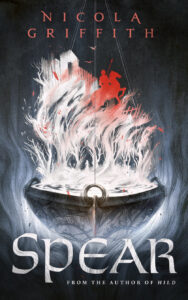
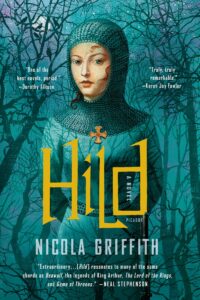
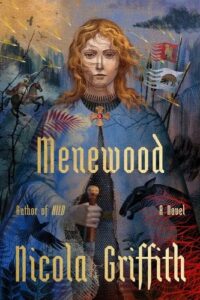
Nicola Griffith is well-known for her award-winning literary and genre fiction, which has earned the Los Angeles Times Book Prize, Society of Authors ADCI Literary Prize, two Washington State Book Awards, the Premio Italia, Nebula, World Fantasy, and Otherwise awards, and six Lambda Literary Awards. She was inducted into the Science Fiction and Fantasy Hall of Fame in 2024 and named a Damon Knight Grand Master of Science Fiction in 2025 for lifetime achievement in science fiction and/or fantasy. Most recently, she is the author of Menewood (MCD 2023), Hild (FSG 2013), winner of the Washington State Book Award; Spear (Tordotcom, 2022), winner of the L.A. Times Ray Bradbury Prize and the inaugural ADCI Prize for positive representation of disability, and finalist for the Locus Award, Nebula Award, World Fantasy Award, Ursula K. LeGuin Prize For Fiction, and Historical Writers Association Gold Crown Award. Her essays and short fiction have appeared in an assortment of academic texts and a variety of journals, including Nature, New Scientist, Los Angeles Review of Books and Out.
Speaking Topics:
The Story of Disability
Nicola Griffith is disabled; she has MS and deals with illness and physical impairment. Fixing the built environment—increasing physical access—is vital, but it’s just a beginning. What we really need to change is people’s minds. How people see someone can be as much, or more, of a problem than actual access.
How do we change minds? By changing the story. We change the inspirational cripple into a real human being. In a lot of stories, disabled characters exist to serve as a lesson for the non-disabled. We die tragically or are magically cured to provide audience catharsis and/or cheap narrative solutions; we overcome impossible obstacles through grit and positive attitude—or just get up in the morning and brush our teeth with no hands—in order to inspire others; or (my favourite) we have an epiphany which magically makes everything okay now and relieves the audience of any responsibility for making anything better.
Norming the Other — How Fiction Can Change What We Feel
Griffith creates vivid and psychologically complex characters with a goal of ‘norming the other’. Her award-winning fiction centers the experiences of people traditionally marginalized in literature — the disabled, the queer, the poor, people of color — with a deliberate goal of building narrative empathy. In this talk she explores how stories condition our behavior, how implicit bias is embedded in the narratives we consume, and how writers and readers alike can consciously work to overwrite old, harmful scripts with new, more human ones. Narrative empathy can allow every reader to see members of marginalized groups – whether queer, poor, disabled, or people of color – to be as human as the reader themselves.
Bio
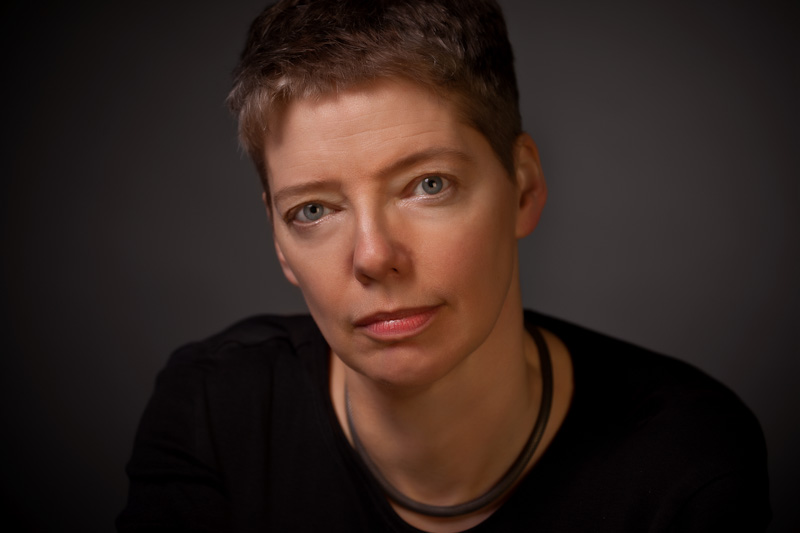
Nicola Griffith is a native of Yorkshire, England, and is now a dual US/UK citizen. When she lived in England she earned her beer money teaching women’s self-defense, fronting a band, and arm-wrestling in bars. Then she discovered writing, and moved to the US.
Her immigration case was a fight and ended up making new law: the State Department declared it to be “in the National Interest” for her to live and work in this country. This didn’t thrill the more conservative power-brokers, and she ended up on the front page of the Wall Street Journal, where her case was used as an example of the country’s declining moral standards. In 1993 a diagnosis of multiple sclerosis slowed her down a bit.
In addition to her fiction and nonfiction (New York Times, Guardian, Nature, New Scientist) she is known for her data-driven 2015 work on bias in the literary ecosystem and as founder and co-host, with Alice Wong, of #CripLit. She holds a PhD from Anglia Ruskin University, is married to writer Kelley Eskridge, and lives in Seattle.
Interested in other award-winning author speakers? See also Tessa Hulls, Putsata Reang, and Loung Ung.